
⭐ REAL REPAIR ⭐
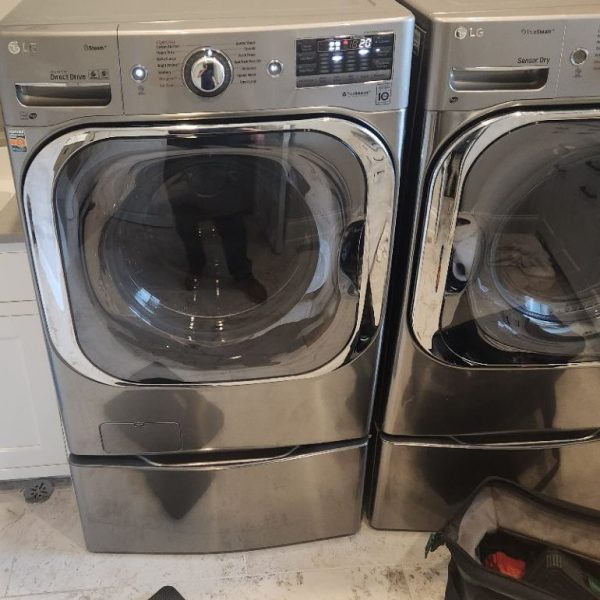
The washer turned on, but it wasn’t filling with water or spinning. Instead, the homeowner heard a humming noise, and the laundry wasn’t getting done.
Our technician discovered water sitting inside the washer and a drain pump that had locked up. Here’s how we got this LG front-load washer running again.
good to know
A humming sound without spinning can have several causes, including a drain pump that isn’t working properly.
If water remains in the tub, the washer may not move into the spin cycle because it hasn’t drained.
A blocked or failed drain pump is one possible cause. The symptoms help narrow down the problem, but an inspection is needed to confirm it.
A homeowner in St. Charles, Illinois, had an LG front-load washer that powered on but wasn't filling with water or spinning. Instead, it made a humming noise.With the washer unable to complete a cycle, the homeowner needed to find out what was preventing it from working.
During the inspection, our technician found water remaining in the washer tub. Further investigation revealed that the drain pump had locked up and was no longer operating properly.The technician replaced the failed drain pump to restore the washer's ability to remove water.
After installing the replacement pump, our technician ran the washer to verify its operation.The LG washer tested and ran properly, allowing the homeowner to get back to their laundry routine.
A humming sound without spinning can indicate a problem with the drain pump, motor, or another component. If water remains in the tub, a drainage problem may be preventing the washer from moving into the spin cycle.
Yes. Many front-load washers need to drain water before reaching full spin speed. If the drain pump fails or becomes blocked, the washer may not complete the spin cycle.
Water remaining in the tub can be caused by a clogged drain pump filter, blocked drain hose, or failed drain pump. In this St. Charles repair, the technician found that the drain pump had locked up.
A washer that powers on but won’t begin or complete a cycle can have several possible problems, including drainage issues, water supply problems, or faulty components. A technician can inspect the appliance to identify the cause.
It depends on the dishwasher’s age, overall condition, the parts needed, and the cost of the repair.
A dishwasher that won’t fill or has a leaking sump may be repairable without replacing the entire appliance.
A proper diagnosis helps homeowners compare their repair options before deciding whether to repair or replace the dishwasher.

These cookies are necessary for the website to function and cannot be switched off in our systems.
These cookies help us understand how visitors interact with our website.
These cookies are used to track visitors across websites to display relevant advertisements.
These cookies enable the website to remember choices you make and provide enhanced, personalised features.